
The Jury
Economics
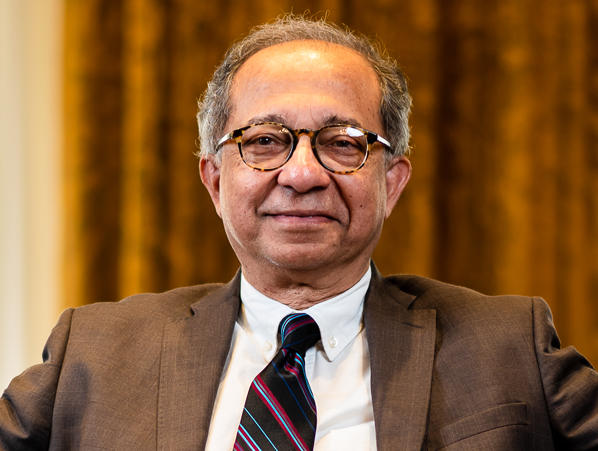
Kaushik Basu
Professor of Economics and the Carl Marks Professor of International Studies, Cornell University and Former Chief Economist and Senior Vice President, World Bank
View More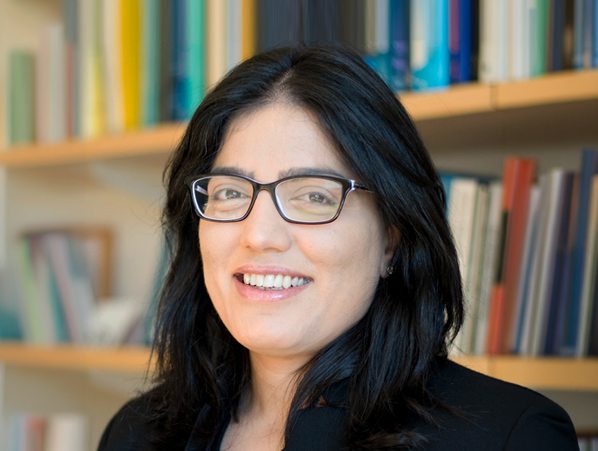
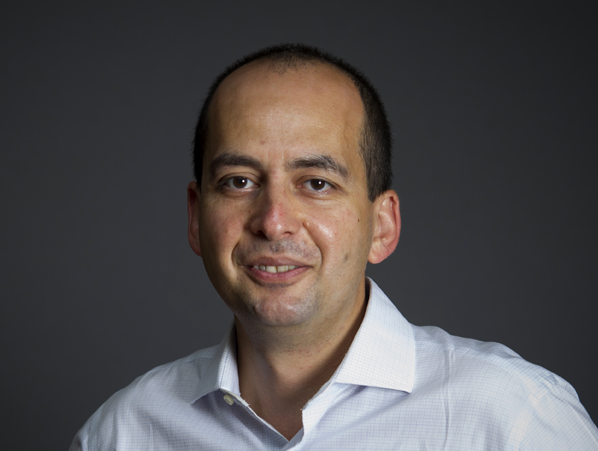
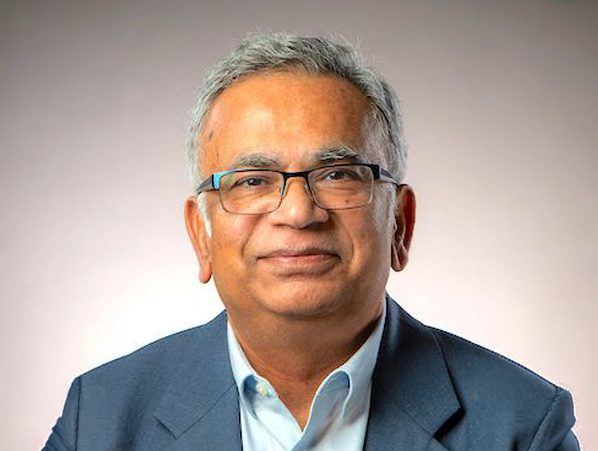
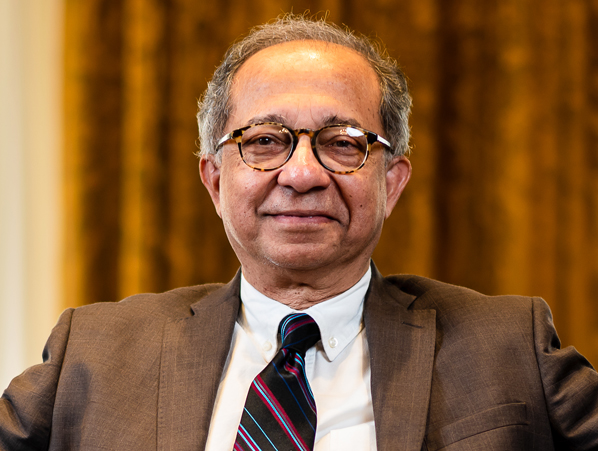
Kaushik Basu
Professor of Economics and the Carl Marks Professor of International Studies, Cornell University and Former Chief Economist and Senior Vice President, World Bank
View More
Kaushik Basu
Professor of Economics and the Carl Marks Professor of International Studies, Cornell University and Former Chief Economist and Senior Vice President, World Bank
View More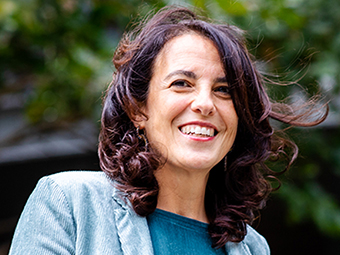
Economics 2026
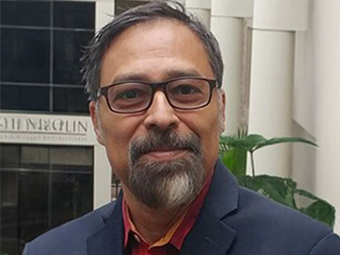
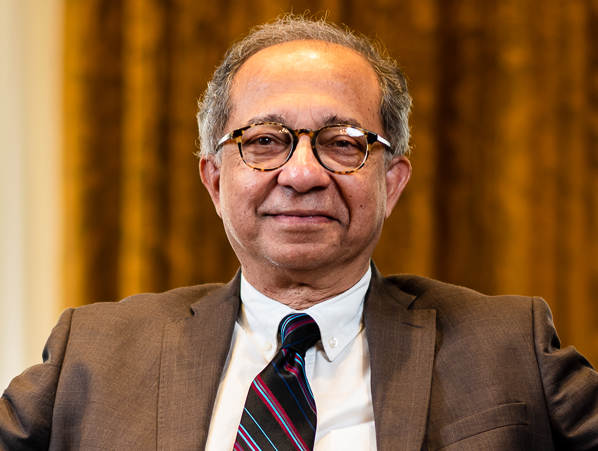
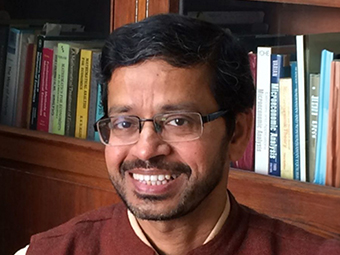
Kaushik Basu is Professor of Economics and the Carl Marks Professor of International Studies at Cornell University. Prof. Basu is a former Chief Economist and Senior Vice President of the World Bank. Basu is the second World Bank Chief Economist from a developing country and the first from India. Prior to joining the World Bank, he served as Chief Economic Adviser to the Government of India. Prof. Kaushik Basu is a Fellow of the Econometric Society and received India's Padma Bhushan award as well as the National Mahalanobis Memorial award. He is currently President of the International Economic Association. Prof. Basu's contributions span development economics, welfare economics, industrial organization and game theory. In addition to Cornell, he has taught at the Delhi School of Economics, Harvard, Princeton and MIT. Prof. Kaushik Basu has published widely in academic journals and has contributed articles to many widely read magazines and newspapers. He has written several books including Beyond the Invisible Hand: Groundwork for a New Economics (Princeton University Press and Penguin); and An Economist in the Real World: The Art of Policymaking in India (MIT Press). Prof. Basu holds a Ph.D. in Economics from the London School of Economics. He has received honorary doctorates from several institutes, including IIT-Bombay, and Fordham University, New York. He was recipient of the 2021 Humboldt Research Award for Economics, given by the Humboldt Foundation, Berlin.
Prof. Tavneet Suri is the Louis E. Seley Professor of Applied Economics and a Professor of Applied Economics at the MIT Sloan School of Management. Her expertise is in the role of technology in Sub-Saharan Africa.
Prof. Suri is a member of the executive committee of the Abdul Latif Jameel Poverty Action Lab, and a faculty research associate at the National Bureau of Economic Research.
Tavneet Suri grew up in Kenya and obtained her B.A. in Economics from Cambridge University followed by a Ph.D. from Yale University. She joined the Sloan School of Management in 2006.
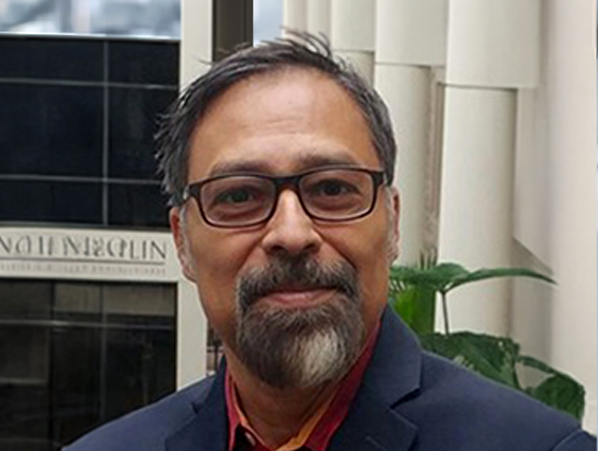
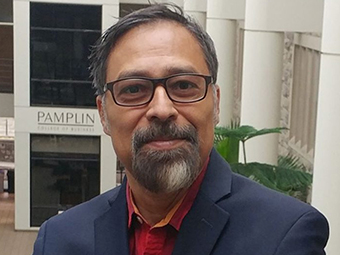
Sudipta Sarangi is Professor & Department Head at the Department of Economics, Virginia Tech. Prior to joining Virginia Tech, he was a Distinguished Professor of Business Administration at Louisiana State University and a Program Director at the National Science Foundation. He spent the 2023-24 academic year at the Collegium de Lyon as a Fellow of the French Institutes for Advanced Study. His research interests range from network theory, experimental and behavioral economics to development economics.
After obtaining his B.A. in Economics from the University of Delhi, and an M.A. in Economics from the Delhi School of Economics, Prof. Sarangi received his Ph.D. in Economics from Virginia Tech.
He has been a consultant to organizations like the World Bank and FAO. Besides publishing in a wide range of journals, he currently serves on various editorial boards including journals like Journal of Economic Behavior and Organization, Journal of Public Economic Theory, Oxford Open Economics and Economic Modelling. While he has published a number of academic books, his book The Economics of Small Things which explains economics using everyday phenomena aimed at non-economists was released by Penguin India in 2020.
Levon Barseghyan is the Robert Julius Thorne Professor of Economics at Cornell University. Prof. Barseghyan’s research involves the study of risk preferences, with a focus on understanding how people perceive and evaluate risk. His work also includes understanding the effects of institutions and policies on economic outcomes, leading to research questions at the intersection of growth, public finance and political economy. Barseghyan has a Diploma in Mathematics from Yerevan State University, an M.S. in Industrial Engineering from the American University of Armenia, and an M.S. in Policy Economics from the University of Illinois at Urbana-Champaign. He obtained his Ph.D. from Northwestern University.
Prof. Ajit Mishra is Professor & Head of Department of Economics at the University of Bath. Prof. Mishra has also held positions at the Delhi School of Economics (India), Indira Gandhi Institute of Development Research (India) and University of Dundee (UK). He has served as director of the Institute of Economic Growth, Delhi, and has had visiting positions at several institutions including Cornell University, Boston University, Stellenbosch University, and Ashoka University.
Among his published books are The Economics of Corruption (2005, OUP), Markets, Governance, and Institutions in the Process of Economic Development co-edited with Tridip Ray (2017, OUP), The Political Economy of Corruption co-edited with Chandan Jha and Sudipta Sarangi (2023 Routledge) and Law and Economic Development: Behavioral and Moral Foundations of a Changing World, co-edited with Kaushik Basu (2023, Palgrave Macmillan).
Mishra holds a Ph.D. in Economics from the Delhi School of Economics (India), having completed his M.A. at the same institute.
Dr. Roberta Gatti joined the World Bank in 1998 as a Young Professional in the Macro unit of the Development Research Group. She has since led analytical agendas on growth, firm productivity, gender, social inclusion and labor markets, including as the Global Lead for Labor policies. She has also managed teams and lending portfolios in both the MENA and the Europe and Central Asia regions.
Dr. Gatti was appointed Chief Economist for the Middle East and North Africa in 2020. In this role, she oversees analytical work to support the Bank’s operations and economic surveillance in countries in the region. In her previous capacity as Chief Economist for the Human Development practice group, she co-led the conceptualization and release of the World Bank Human Capital Index and oversaw the Service Delivery Indicators data initiative.
Roberta Gatti received her B.A. from Bocconi University in 1992 and her Ph.D. in Economics from Harvard University in 1998.
Economics 2025
Kaushik Basu is Professor of Economics and the Carl Marks Professor of International Studies at Cornell University. Prof. Basu is a former Chief Economist and Senior Vice President of the World Bank. Basu is the second World Bank Chief Economist from a developing country and the first from India. Prior to joining the World Bank, he served as Chief Economic Adviser to the Government of India. Prof. Kaushik Basu is a Fellow of the Econometric Society and received India's Padma Bhushan award as well as the National Mahalanobis Memorial award. He is currently President of the International Economic Association. Prof. Basu's contributions span development economics, welfare economics, industrial organization and game theory. In addition to Cornell, he has taught at the Delhi School of Economics, Harvard, Princeton and MIT. Prof. Kaushik Basu has published widely in academic journals and has contributed articles to many widely read magazines and newspapers. He has written several books including Beyond the Invisible Hand: Groundwork for a New Economics (Princeton University Press and Penguin); and An Economist in the Real World: The Art of Policymaking in India (MIT Press). Prof. Basu holds a Ph.D. in Economics from the London School of Economics. He has received honorary doctorates from several institutes, including IIT-Bombay, and Fordham University, New York. He was recipient of the 2021 Humboldt Research Award for Economics, given by the Humboldt Foundation, Berlin.
After obtaining his B.A. in Economics from the University of Delhi, and an M.A. in Economics from the Delhi School of Economics, Prof. Sarangi received his Ph.D. in Economics from Virginia Tech.
He has been a consultant to organizations like the World Bank and FAO. Besides publishing in a wide range of journals, he currently serves on various editorial boards including journals like Journal of Economic Behavior and Organization, Journal of Public Economic Theory, Oxford Open Economics and Economic Modelling. While he has published a number of academic books, his book The Economics of Small Things which explains economics using everyday phenomena aimed at non-economists was released by Penguin India in 2020.
Among his published books are The Economics of Corruption (2005, OUP), Markets, Governance, and Institutions in the Process of Economic Development co-edited with Tridip Ray (2017, OUP), and Law and Economic Development: Behavioral and Moral Foundations of a Changing World, co-edited with Kaushik Basu (2023, Palgrave Macmillan).
Mishra holds a Ph.D. in Economics from the Delhi School of Economics (India), having completed his M.A. at the same institute.
Lata Gangadharan is a fellow of the Academy of the Social Sciences in Australia and is President-Elect of the Economic Science Association, which is the international society of experimental economists.
Gangadharan currently serves as a co-Editor-in-Chief at the Journal of Economic Behavior and Organization and an Associate Editor at Management Science. She is a former co-editor of Experimental Economics and has also served on the editorial boards of the Journal of Economic Psychology, Economic Inquiry and American Journal of Agricultural Economics.
Prof. Suri is a member of the executive committee of the Abdul Latif Jameel Poverty ActionLab, and a faculty research associate at the National Bureau of Economic Research.
Tavneet Suri grew up in Kenya and obtained her B.A. in Economics from CambridgeUniversity followed by a Ph.D. from Yale University. She joined the Sloan School ofManagement in 2006.
Economics 2024
Kaushik Basu is Professor of Economics and the Carl Marks Professor of International Studies at Cornell University. Prof. Basu is a former Chief Economist and Senior Vice President of the World Bank. Basu is the second World Bank Chief Economist from a developing country and the first from India. Prior to joining the World Bank, he served as Chief Economic Adviser to the Government of India. Prof. Kaushik Basu is a Fellow of the Econometric Society and received India's Padma Bhushan award as well as the National Mahalanobis Memorial award. He is currently President of the International Economic Association. Prof. Basu's contributions span development economics, welfare economics, industrial organization and game theory. In addition to Cornell, he has taught at the Delhi School of Economics, Harvard, Princeton and MIT. Prof. Kaushik Basu has published widely in academic journals and has contributed articles to many widely read magazines and newspapers. He has written several books including Beyond the Invisible Hand: Groundwork for a New Economics (Princeton University Press and Penguin); and An Economist in the Real World: The Art of Policymaking in India (MIT Press). Prof. Basu holds a Ph.D. in Economics from the London School of Economics. He has received honorary doctorates from several institutes, including IIT-Bombay, and Fordham University, New York. He was recipient of the 2021 Humboldt Research Award for Economics, given by the Humboldt Foundation, Berlin.
Eliana La Ferrara is currently Professor of Public Policy at Harvard Kennedy School. A renowned economist, Prof. Eliana La Ferrara’s research interests lie in the field of development economics, with a focus on the role of political and social factors in economics. She has studied ethnic diversity, kin structure and social norms, aspirations and the effects of television on social outcomes. She has also investigated political constraints to development, with particular focus on violent conflict in Africa. Prof. La Ferrara’s work has been published in the American Economic Review, Econometrica, The Quarterly Journal of Economics, Journal of Development Economics, American Economic Journal: Applied Economics, and the Journal of the European Economic Association.
La Ferrara earned her Ph.D. in Economics from Harvard University in 1999 and was previously the Fondazione Invernizzi Chair in Development Economics at Bocconi University. She holds many honors and fellowships, such as: Foreign Honorary Member of the AEA, International Honorary Member of the American Academy of Arts and Sciences, and Fellow of the Econometric Society. Prof. La Ferrara is currently the President of the Econometric Society and has been President of the European Economic Association and of the Bureau for Research in the Economic Analysis of Development (BREAD). She is the Program Director for Development Economics at the Centre for Economic Policy Research (CEPR) and the Director of the Laboratory for Effective Anti-poverty Policies (LEAP) at Bocconi. Prof. Eliana La Ferrara is the recipient of the 2020 Birgit Grodal Award and of numerous grants, including from the European Research Council (ERC), the European Commission, and USAID DIV. She is an affiliate of J-PAL and regularly works with major international organizations and NGOs to evaluate the effectiveness of development policies.
Seema Jayachandran is Professor of Economics and Public Affairs at Princeton University. Prof. Jayachandran’s research focuses on environmental conservation, gender equality, health, and other microeconomic topics in developing countries.
Prof. Seema Jayachandran has a bachelor's degree in electrical engineering from MIT, and a master's degree in physics and philosophy from the University of Oxford where she was a Marshall Scholar. She received her Ph.D. in Economics from Harvard University.
Prior to joining Princeton, Prof. Seema Jayachandran taught at Northwestern University and Stanford University. She serves on the board of directors of the Abdul Latif Jameel Poverty Action Lab (J-PAL) and leads J-PAL's gender sector. Prof. Jayachandran is also co-director of the National Bureau of Economic Research's program in Development Economics and co-editor of American Economic Review: Insights. She also serves on CARE's board of directors.
Sudipta Sarangi is Professor & Department Head at the Department of Economics, Virginia Tech. Prior to joining Virginia Tech, he was a Distinguished Professor of Business Administration at Louisiana State University and a Program Director at the National Science Foundation. He spent the 2023-24 academic year at the Collegium de Lyon as a Fellow of the French Institutes for Advanced Study. His research interests range from network theory, experimental and behavioral economics to development economics.
After obtaining his B.A. in Economics from the University of Delhi, and an M.A. in Economics from the Delhi School of Economics, Prof. Sarangi received his Ph.D. in Economics from Virginia Tech.
He has been a consultant to organizations like the World Bank and FAO. Besides publishing in a wide range of journals, he currently serves on various editorial boards including journals like Journal of Economic Behavior and Organization, Journal of Public Economic Theory, Oxford Open Economics and Economic Modelling. While he has published a number of academic books, his book The Economics of Small Things which explains economics using everyday phenomena aimed at non-economists was released by Penguin India in 2020.
Tridip Ray is Professor in the Economics and Planning Unit at the Indian Statistical Institute, Delhi. After obtaining a B.Sc. in Economics from Presidency College, University of Calcutta and in M.A. in Economics from the Delhi School of Economics, Prof. Tridip Ray received his Ph.D. in Economics from Cornell University. His areas of research include economic development and growth, inequality, financial development, economics of education, and applied microeconomics.
Prof. Ray’s publications include Markets, Governance, and Institutions in the Process of Economic Development, (co-edited with Ajit Mishra), Oxford University Press: Oxford, 2017 and New and Enduring Themes in Development Economics, (co-edited with Bhaskar Dutta and E. Somanathan), World Scientific: Singapore, 2009. He has co-authored several papers in various reputed journals.